From plant to candidate
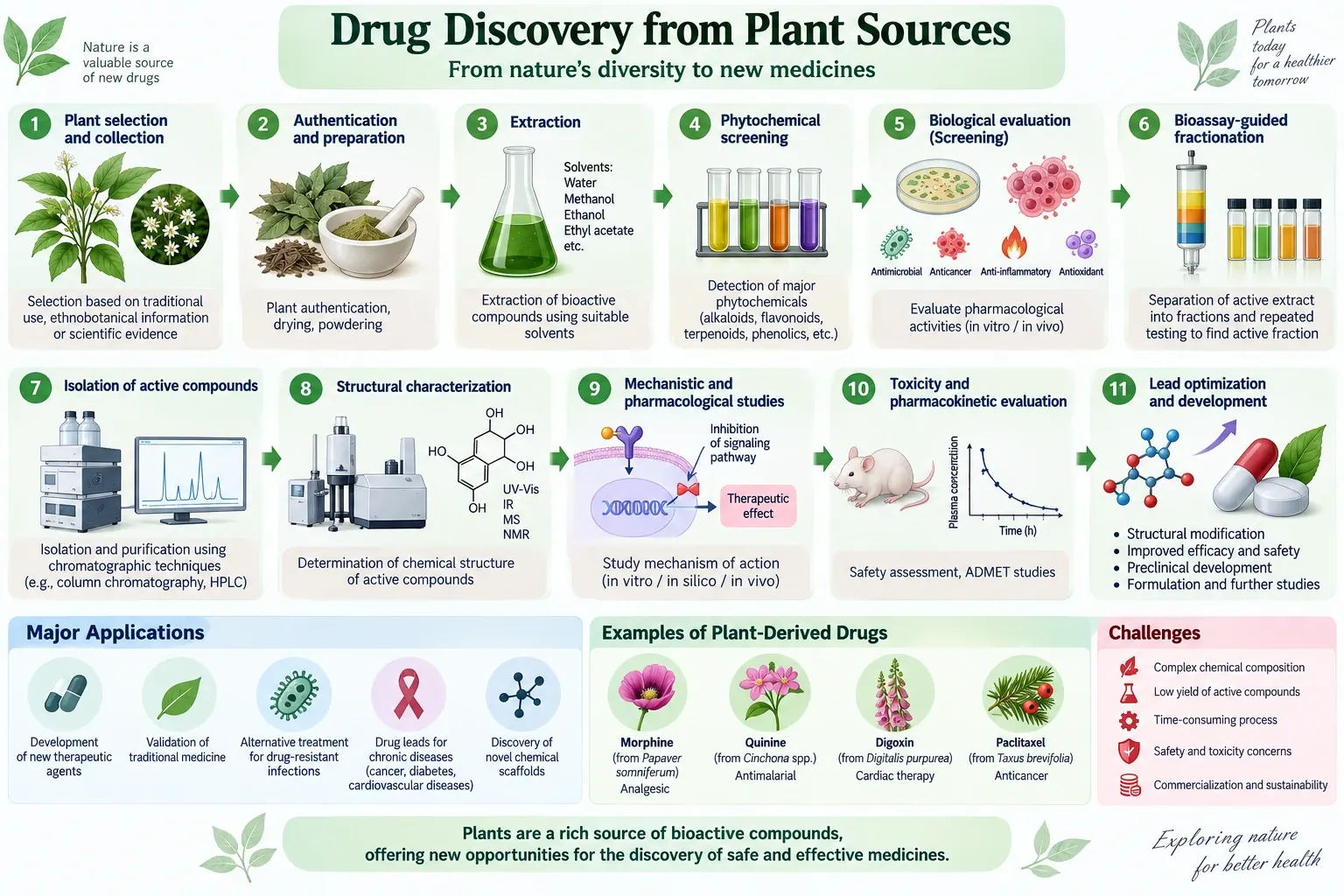
Drug discovery from plant sources is the systematic process of identifying, isolating, characterizing, and developing biologically active compounds from medicinal plants into potential therapeutic agents. Plants produce a wide range of primary and secondary metabolites, including alkaloids, flavonoids, terpenoids, phenolics, tannins, glycosides, and saponins. Many of these compounds possess pharmacological activities and can serve as lead molecules for new drug development.
Screening for activity
The process generally begins with the selection and collection of a plant, often based on traditional medicinal use, ethnobotanical information, or preliminary scientific evidence. The plant material is authenticated, dried, and extracted using suitable solvents. The extracts are then subjected to phytochemical screening and biological evaluation to identify promising activities such as antioxidant, antimicrobial, anti-inflammatory, anticancer, antidiabetic, or thrombolytic effects.
Isolating the active compound
Promising extracts undergo bioassay-guided fractionation, in which the active extract is separated into different fractions and tested repeatedly to identify the fraction containing the active compound. The active constituents are subsequently isolated and structurally characterized using techniques such as chromatography, mass spectrometry, UV-visible spectroscopy, infrared spectroscopy, and nuclear magnetic resonance spectroscopy.
Validation and optimization
The identified compounds can then undergo in vitro and in vivo pharmacological evaluation, followed by toxicity studies, mechanism-of-action studies, pharmacokinetic evaluation, and optimization of the lead compound. Modern approaches such as molecular docking, molecular dynamics, ADMET prediction, metabolomics, and computational drug design can complement experimental studies and help accelerate the discovery process.