Understanding polymorphism
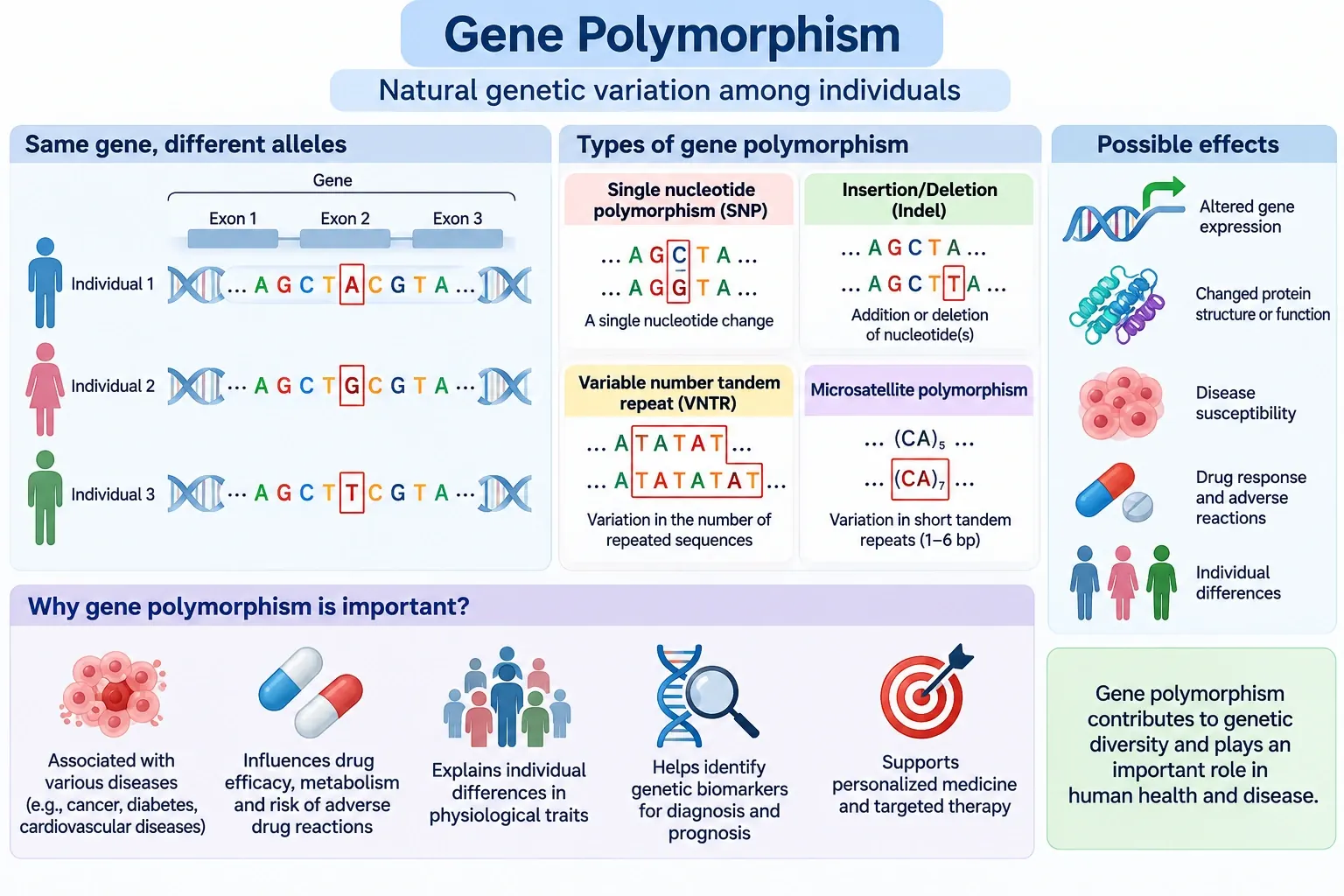
Gene polymorphism refers to the presence of two or more different forms of a gene, known as alleles, within a population. These genetic variations result from differences in the DNA sequence among individuals and are generally common enough to be considered normal genetic variation rather than rare mutations. Polymorphisms may occur in different regions of a gene, including coding regions, promoter regions, introns, or other regulatory regions. Depending on their location and nature, they may have no noticeable effect or may influence gene expression, protein function, or other biological processes.
Common forms
The most common form of gene polymorphism is the single nucleotide polymorphism (SNP), in which a single nucleotide differs between individuals. Other forms include insertions and deletions (indels), variable number tandem repeats (VNTRs), and microsatellite polymorphisms. Some polymorphisms can alter the amount or activity of a protein, while others may have little or no functional effect.
Biomedical significance
Gene polymorphisms are important in biomedical research because they can contribute to individual differences in disease susceptibility, disease progression, drug response, and adverse drug reactions. For example, variations in genes involved in drug-metabolizing enzymes can influence how rapidly an individual metabolizes a particular medicine. Similarly, polymorphisms in genes involved in DNA repair, cell proliferation, inflammation, or hormone regulation may be associated with susceptibility to certain diseases.
From variation to care
Therefore, the study of gene polymorphisms provides valuable information about genetic diversity and its relationship with human health and disease. Identification of disease-associated polymorphisms may also contribute to the development of genetic biomarkers and support personalized approaches to diagnosis and treatment.